Smartphones: As important as deodorant?

thSome people are a bit too e-connected: carrying their smartphones around like fifth limbs, endlessly checking their screens, ignoring their children in favor of cat photos or an updated Facebook status.

The recent Bank of America “Trends in Consumer Mobility Report” indicates just how wired some of us have become. Nine out of 10 respondents said their smartphones are just as important to their daily lives as deodorant and toothbrushes.

I see a distinct difference: If you forget to use the phone your coworkers won’t look trapped when you enter their cubicles.

Just 7 percent of respondents find it annoying when someone checks a phone during mealtime. Personally, I think that unless you’re waiting for the transplant center to call about that kidney, you should back away from the phone now and then. Meals eaten with other people are an excellent place to start.

If they had to give something up to be able to get access to a cellphone, the majority of respondents (45 percent) said “alcohol.” Which, of course, would solve the problem of drunk-dialing.

Read more

Wealthy people think you could live on less.

thHere’s a piece of advice from the rich: You ought to be able to live comfortably on $25,000 to $50,000 per year.

This was one of the takeaways from the Country Financial Security Index, a survey of about 3,000 U.S. residents published a few months ago. More than half (55 percent) of the respondents consider themselves “middle-class,” even though some of them made incomes of as much as $200,000 a year.

Depending on where you live, $200k might not be enough to live on, at least comfortably. Which brings us to another result, something called the survey authors call the “comfort gap.” Nearly half of the respondents believe that $50,000 to $100,00 is enough to live comfortably. Yet only 34 percent consider the people who earn such incomes to be “financially well-off.”

Sure, they may have nice stuff. But actual security? Not gonna happen on that salary.

And here’s the part that concerns me: More than half of the respondents who described themselves as “wealthy” believe that an individual could live comfortably on $25,000 to $50,000 a year.

Read more

How much underwear do you have?

th-1While chatting with a relative recently about small vs. large savings, I mentioned that I wasn’t interested in making my own laundry soap. The money saved would amount to about 8 cents per load, and DF and I generally do no more than six loads of laundry per month (and usually fewer).

The relative was shocked: “We do two or three loads a week for just the three of us.”

Then again, one of those three is a very active 8-year-old – in other words, lots of dirty clothes. That also means an extra set of sheets each week. And for all I know, that family uses a bath towel only once.

That’s how I grew up; my mom didn’t think it was sanitary to reuse a towel. Boy, did I get over that idea when I moved out on my own.

But that got me to thinking: Are we really grimy people for not caring whether the towel gets used, reused and re-reused?

Read more

The call of the Koolickle.

thRecently DF came into possession of a special report from the University of Mississippi’s Meek School of Journalism and New Media. “Land of plenty: Will food save the Delta or be its death?” is beautifully photographed and contains fascinating articles about the foods commonly consumed in the Mississippi Delta.

These range from the expected (barbecue, greens, fried chicken) to the surprising (tamales, kibbeh, Italian, Asian, haute cuisine). A supermarket is the only one in the Kroger chain that grinds its own meat, because the kibbeh consumers demand fresh grind of a specific quality.

This isn’t just a travelogue, mind you. The writers focused on nutrition issues, food deserts and health problems. We also learn about prawn farming, soul food, family-run eateries, blues music, restaurants that turned dying cities into Saturday-night destinations.

And we learn about Koolickles, a Delta delicacy also known as Pickoolas: dill pickles marinated in brine, sugar and double-strength Kool-Aid.

This is the home of the fried pickle, so it’s no surprise that gherkins might receive unusual treatment. But Kool-Aid pickles struck me as both horrifying and fascinating. Try as I might, I couldn’t get the idea out of my head.

Reader, I made some.

Read more

Want a chance at a decent old age? Have a daughter.

thWhen middle-aged sons live with their parents, it’s probably because they’re underemployed or unemployed. But middle-aged daughters are more likely to bunk with their parents in order to take care of them, according to a new survey from Yodlee Interactive.

Men ages 35 to 44 are more than twice as likely as women to receive economic support from their parents, and more than three times as likely than women to live at home.

Oh, and daughters are more likely to provide “emotional” support as their parents age, regardless of living arrangements. In fact, 20 percent of the men surveyed say they do not plan to call or visit Mom and Dad as they grow old. Nice.

Maybe it’s because women are socialized to be caregivers. Maybe it’s because they’re guilted into it. My best friend from childhood cared for her father during a long battle with dementia, and also dealt with her mother’s congestive heart failure, despite working and having two kids.

When she asked her older brother for help he told her that because she was the daughter it was her “duty” to take care of their parents.

I am not making that up. And yes, it happened fairly recently, vs. back in the 1800s.

Read more

Ally Bank might give you $100.

thI figured that would get your attention. The $100 in question comes in the form of Amazon scrip, and two such gift cards will be given away during Ally’s monthly TweetChat on June 24.

That’s tomorrow, in case you aren’t keeping track. The topic is one with which all of us could use some schoolin’.

“Protecting Yourself Online” is just what it sounds like: the latest on security and how to protect your identity and your digital assets. As the Ally wonks note, you wouldn’t give your car keys to a stranger or leave your home’s windows and doors open – yet plenty of us are fairly unguarded online.

According to Consumer Reports, 62 percent of U.S. citizens have done nothing to protect themselves when using the Internet. That’s understandable, since digital security can be a very confusing topic – and since well-publicized data breaches make it look as though no one can really guard against determined hackers.

Read more

Information wants to be free. Writers want to be paid.

thA post on my daughter’s website might get under some writers’ skins. Not mine – and not just because she’s my daughter.

Why I refuse to have a donate button” helped me clarify something that’s been twigging me lately: the proliferation of “please pay me” buttons on personal websites.

Newspapers and other sites are experimenting with paywalls to recoup at least some of the costs associated with professional writing (and, presumably, professional standards). So why not bloggers?

To my daughter, at least, the pay-to-read mentality comes across “as either grandiose (let’s face it, none of us is the NYT) or greedy.”

“Asking readers for money just seems crass,” Abby writes. In part that’s because she associates pay-me buttons with paid content, aka “sponsored posts,” aka “stuff some company pays you to run.” While she acknowledges that not everyone would feel this way, Abby says she’s less likely to return to a blog with a donate button unless “there is a good reason why the person actually needs help.”

To some extent I can see the purpose of a button: It’s like paying for a magazine subscription. Sites that put out great stuff have writers who put great effort into the posts.

Lots of sites don’t.

Read more

Prepping: It’s not just for grownups anymore.

thumbDallas resident Bernie Carr sees no reason that city dwellers can’t be ready for trying times. Having written The Apartment Prepper blog for several years and having written “The Prepper’s Pocket Guide: 101 Easy Things You Can Do to Ready Your Home for a Disaster,” Carr has made preparedness more accessible to a lot of folks who don’t own bunkers.*

Now she’s taking on a new audience: kids.

Not to scare them into stockpiling skateboard wheels and Fruit Roll-Ups, but rather to make the idea of getting ready for any challenge – be it power failure or hurricane, earthquake or zombie apocalypse – less frightening.

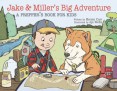
Her new picture book, “Jake & Miller’s Big Adventure: A Prepper’s Book for Kids” (Ulysses Press) is designed to show young readers that it’s smarter to be prepared than scared. While imagining an amazing trip (deserts, mountains, jungle, a cave) they pack the supplies they need to stay warm, fed and safe.

Carr has donated a copy of the book for this week’s giveaway. Whether you’re a parent or a teacher, whether you live in Tornado Alley or on the Ring of Fire, Jake and Miller’s story can show kids that getting ready isn’t scary – it’s smart.

Read more

Free health screenings. Also: Gift cards and an iPotty.

14546594_130417061717_138x138When possible, I try to post free stuff and the chance to win gift cards because these are good ways to stretch the budget. Here are four such opps, all of which could turn out to be great frugal hacks – that is, if you live near a Sam’s Club and/or are lucky enough to win.

(About that “iPotty”: I am not making that up. I couldn’t make that up. More on it below.)

On Saturday, June 14 you can get free men’s health screenings at all Sam’s Club locations that have pharmacies. You don’t have to be a member to take advantage of:

  • PSA (prostate-specific antigen), for men 40 and older
  • Total cholesterol and HDL cholesterol
  • Glucose
  • Body mass index
  • Blood pressure
  • Vision
  • Risk ratio

The screenings are offered between 11 a.m. and 3 p.m. In honor of Father’s Day, maybe the dad(s) in your life will give you a gift: the opportunity to be in your life longer by being proactive about health.

Read more

8 tips for living on your own.

thA reader named Nancy, winner of a $10 Wal-Mart gift card in my fifth anniversary giveaway, contacted me to ask about the solo life.

“I’m about to live on my own for the first time, and this gift card will parlayed into something important, like toilet paper or spices,” she wrote. “Any advice you can offer on how to live alone…would be appreciated.”

Although I’m now quite happily partnered, I did live on my own from February 2005 until well into 2012. And I loved it. Loved, loved, loved it.

Possibly that was because I’d lived alone less than a year total in almost 47 years on the planet. Being by myself – no one to tell me what to do, to turn the TV way up, to track across the floor I’d just mopped – was a tremendous luxury.

When I became a midlife college student, that solitude felt not just splendid but necessary. I’d stagger through my apartment door, set down my book bag, kick off my shoes, prepare a simple meal and luxuriate in the quiet.

A major downside to living alone? Paying for everything.

Read more